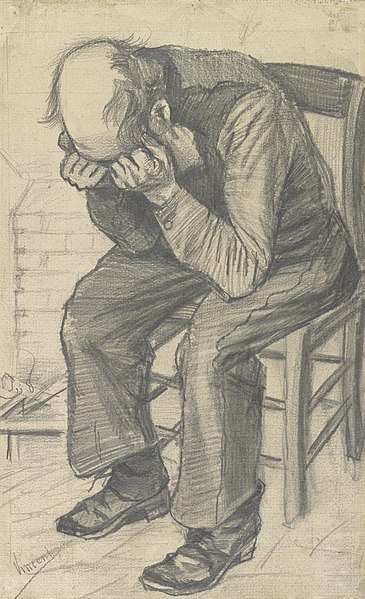
You know how you sometimes feel lazy, plus guilty about same?
But when you think about it, I reckon some “lazy” is more than ok… why not optimise some things for convenience, saving time/energy for other things? That’s worthwhile. Example:
In an article that dates back to the 1990′s the link was made between CEO’s, particularly CEO’s in emerging industries and technologies and manic depression. [1] You would be surprised how many very successful CEO’s battle with this every day. From my own father, an entrepreneur of the 1980′s and 1990′s, who has now fallen out of the game after a business failure, to my peers in Business SA’s Young Entrepreneurship Scheme that I participated in last year. The evidence that this link exists seems to be constantly re-affirmed in my daily experiences.
Even this last week, I was exposed to the idea again, not through my work as a consultant but, instead though the amazing TED and TEDx presentations that I have taken to watching in my downtime. Maybe this one that discusses manic depression in relation to ADHD, childhood experiences and entrepreneurship may interest you? [2] Grab a refreshment and make yourself 22 minutes to enjoy this segment.
[1] Elsberry, Richard B. (1998) “”Bipolar disorder”: Why are they calling it the “CEO’s disease”?” FindArticles.com. Accessed: 19 Jun, 2010. http://findarticles.com/p/articles/mi_qa3726/is_199802/ai_n8798710/
[2] Herold, Cameron (2010) “Raising Kids to be Entrepreneurs” [video] YouTube.com http://www.youtube.com/watch?v=dCar_sFfEf4&feature=player_embedded
I know when I’m feeling down because this little part of my brain starts questioning why I’m doing anything. Why go out and visit friends when I don’t really feel like it? Why do any exercise when I feel tired? Why get all dressed up to go to work? Why get up at all? Why…
Once I recognise this symptom it’s often difficult to fight. I have a somewhat philosophical nature and I like asking those big questions of “what is the right thing to do” and “where should we be going”. It’s easy to get a kind of choice paralysis when asking these questions, and if one is definitely staring down the barrel of a big question – should I disagree with someone I love, should I say something against a person that everyone else agrees with, should I complain about someone else’s misplaced generosity – then it can be really difficult to feel like you can move on. And that’s when you start questioning why you should get out of bed.
It took me a while to feel like I could just ignore some of those questions and move on. But I finally realised that I couldn’t let everything stall just because I can’t answer a question for which, almost by definition, there is no ‘right’ answer. By getting on with the things we do every day – eating, doing the chores, getting out, exercising – we actually give our brains space to process some of those hard questions. And in the process we almost invariably get some more input that adds valuable information.
By getting up and getting on with things, we are not stalling or putting off the question. We are adding to our perception and improving our ability to choose. Stalling is lying in bed doing nothing. And sometimes things will solve themselves naturally without our intervention. Most importantly, we keep to our comfortable routines, we keep on the move for new opportunities, and we don’t lose the energy and momentum to tackle life’s problems.
We sometimes need to walk around the problem and look at it from another angle, and we can only do that if we keep moving.
The following is from BBC News site: Depression link to processed food
After accounting for factors such as gender, age, education, physical activity, smoking habits and chronic diseases, they found a significant difference in future depression risk with the different diets.
Those who ate the most whole foods had a 26% lower risk of future depression than those who at the least whole foods.
By contrast people with a diet high in processed food had a 58% higher risk of depression than those who ate very few processed foods.
Not really surprising (to me, anyway) but interesting to see some research on this. And the difference is quite significant.
Sometimes you get pretty busy, and what’s the first thing to lose out? The daily exercise, being outside (sunlight) for a bit, perhaps the fruit (see the How-To). Sound familiar?
Depending on how you’re going at the time, you may actually get away with it. But it’s a dangerous track to go on… if you happen to get sick or add a bit of stress, there’s trouble. For me personally, I think it works somewhat like an equation, roughly this:
doing ok = ((exercise + daylight + fruit + sleep) >= (stress + illness))
Perhaps someone would care to refine this further?
(I’ve never coded in Lisp but I always use parentheses to keep math clear without implied rules. I know about operator precedence – heck I’ve written little compilers – but being explicit eases code maintenance and reduces bugs)
By the way, we got some press attention this week, see When hackers get the blues. It’s also November again, and that means Movember: the yearly fundraising drive raising awareness for men’s health, this year focusing on depression and prostate cancer. I’ve added it to the links, if you know of other relevant links please let us know!
It has been said that a person’s house tends to be a reflection of their mind… and I think it’s definitely the case that how a house looks/feels affects its occupants. If you have your house pretty much sorted, that is a feel-good factor and something less to potentially worry about.
Basic cleanliness is good of course, but I’m talking more about clutter and really just things that lie about somewhere because they don’t have their own proper spot. The latter may sound a tad anal, but essentially if you store stuff everything has a particular spot to go so by definition that’s how you organise things. Nothing new there. I’m not saying you’ll be labeling each drawer and box, but some people find that handy also. In any case, I think the key factor is storage, since if you don’t have a spot to put something, of course it’s going to end up just “somewhere”. Having storage for stuff makes it easy to not have clutter, so you’re more inclined to maintain it as well.
By the way, I’ve found this works well for kids also. Little smurfs at around age 2 generally love to be very organised, everything needs to have a spot and so on. If you have sufficient (and suitable) storage space for their toys, having them clean up their stuff becomes really easy and natural. In my house my daughter actually now has the master bedroom, simply because it has the most daylight and floor space of all the bedrooms. I don’t need daylight in my bedroom, so everybody is happy and better organised (I don’t mean to start a revolution in other households, you don’t have to tell yours kids about this
.
In Australia there’s a nice chain of stores called “Storage Space” which I sometimes visit for ideas. I tend to not buy much there since it’s quite costly. My personal favourite place for ideas about storage tricks is IKEA. For instance, I’ve always found shelves sucky for clothes, but it’s pretty easy to build something with storage trays that can be pulled out, as well as smart hanging options (for instance for pants).
In closing, a short story that was told to me at Linux.conf.au back in January: a group of friends got together (some travelling interstate) to help a friend clean up their house, sort things. Now that’s a very tricky thing, not everybody would appreciate such “interference”; but I understand they got it right and it really helped that person well beyond just having their house organised. I hope they’ll pop on here some time and tell the full story directly, as I think it’s a great example of how you can, very practically, help someone get back on track. I also think it’s a brilliant example of true friendship.
I drank Earl Grey tea long before Picard ordered it from his replicator on Star Trek. That’s not quite what this story is about, but it is about tea, and how it caused me some major trouble.
Only a few years ago I worked out that I don’t deal well with caffeine. It’s fine at the time, but it causes a serious dip in how I feel the next morning. It’s nasty and not resolved by just ingesting more caffeine. You get the idea. I didn’t drink regular coffee anyway but I cut out mocha (milk based coffee/chocolate blend) and the occasional coca cola (travel, parties, conferences). Tea didn’t appear to cause any hassles, although I am aware that technically a cup of tea can have more caffeine than coffee. Problem solved, until a few weeks ago.
With the cold weather (ok so it’s winter in Australia right now) I’ve been having lots of nice warm tea while I work. For a while it was home-mixed chai which used naturally caffeine-low Daintree tee. It ran out, and because creating a new mix means quite a bit of work (including finely chopping and drying ginger) I temporarily shifted to Earl Grey tea, figuring it’d be ok anyway. Well, I was wrong. I was in a bad way for a number of weeks, until I thought of this angle only a few days ago and of course took immediate action. Much better already!
As we grow (older
we all work out “manuals” for ourselves, but every once in a while a new pattern comes up that doesn’t quite fit what you’ve learnt to recognise and deal with automatically. We live and learn…
My introductory post today is not necessarily directly for the Blue Hacker that finds themselves visiting today but rather to those who support a Blue Hacker as a mate, partner, or other support person. Off the usual post trend, I simply bring an aspect of my story that I am prompted to share. It comes with a message that in essence that just being there for someone who facing depression can make a difference.
Before I start this story though, I clearly state that I am not an expert of any kind when it comes to depression. I, myself, have only dealt with depression on a reactive basis to what life has thrown at me, albeit at times on a cyclical basis as for many years I was held back by chronic illness that had me a hostage in my own house. Beyond that, my experience with long-term depression, bi-polar disorder (manic depression) and also obsessive compulsive disorder are all from supporting family members each with their own conditions to be managed.
As a support person to members of my family I, at first, found the call overwhelming because I did not know what I could do, what I should do and moreso, what limits I should put on myself in terms of the support I offered so that I too did not start to drown. So, today I write about that first real step of just being there.
My father was diagnosed with depression just before I turned fifteen. With the events to follow, including the divorce of my parents, I was estranged from my father by both distance and his inability to sustain or rebuild relationship with me as he we went through years of being on and off medication for his condition.
Many years later, married with two children and in the midst of exams I got a phone call from an uncle. My father had been admitted to hospital and they were concerned that he did not value his life sufficiently to want to make it out again. After barely speaking to my father for over a decade my uncle simply stated, “It’s up to you what you do but I thought you should know.”
Life, to me, is worth far more than is exhibited in the way we treat our bodies these days so there was no question that I needed to do something. I also would have been denying a strong burden on my heart to know my father as a person if I did not. So, between Monday and Thursday exams, I found my way to a photo processor and printed two digital photos each one featuring my boys at that time. They are still today the only digital photos I have ever had processed. I put them into a couple of frames, packed our bags and drove myself and my children over 600km to where my father was hospitalised.
During just one of those mid-exam days we saw my father. He, for the first time, saw my second son and spent time playing with both of my children under two. He marvelled to the nurses about the frames with his grandsons in them in a vocal tone I have only ever heard from a person who is enduring deep depression. Along with the Soduku book and pencil I grabbed his entire perspective changed over the course of the days that followed not only as a result of our visit but also the assurance that we would continue to be in contact after we had returned safely home.
Now, I cannot say that being there for someone will change their ability to manage their depression because it most likely will not – especially in the long term which requires intrinsic motivation. Managing depression is a step by step process that needs to be initiated and journeyed by the individual. However, simply being a part of their lives can assist them to feel ‘connected’. Connectedness allows a person to see a purpose outside of themselves for seeing through each day.
Connectedness is something that seems to be becoming something that is harder to find as we become so heavily network oriented as a global society. John Taylor Gatto in his book ‘Dumbing us Down’ written over 10 years ago speaks quite clearly on how networks force us to segment ourselves to our interests or quests for information and it can bring us to a point where we do not know who we are as a whole and therefore cannot determine the purpose we hold in this life.
Networks, including social and interest-based clubs are great, but being a support person is more than that – it is taking an interest as the person as a whole. No, it does not mean that you should take on their struggles, but it means that when you are there for them by your sheer physical presence you are saying that are there for them in each step of their journey to finding wholeness and purpose – no matter how long the journey may be – simply because that is what friends are for.
Being there to support a person through depresssion is sometimes a difficult task and I am not going to say ‘just be there and everything will be okay’ because often it is not. However, just being there is a great first step as you learn for yourself about the nature of what depression is and how, as a support person, you too need to find personal strategies for managing it’s presence in your life.
Yea, as in the classic TV show with Alan Alda. Of course there’s reruns (again) and I’ve let my MythTV box record some. My favourite characters have always been Hawkeye and Col.Potter. Smart, funny, cynical, way with words.
Col.Potter was in WWI and WWII before Korea where MASH is situated, he’s seen it all before… but Hawkeye, he’s really just like that as a coping mechanism, isn’t he. I used to think he was cool, but with a bit more maturity I see that his attitude has to be seen in the context of the situation and definitely not as a general example of how to be.
Obvious, perhaps, but at the time a lesson for me anyhow. I too have used cynicism (and sarcasm) as a copying mechanism, particularly when I’m tired, stressed, sick, or (even worse!) any combination thereof. I try to catch myself now and consciously work to not behave like an ass in those situations. Hawkeye gets away with it, but I live in the real world…
I’m currently working through a book (it’s more than just reading!) called The Optimistic Child by Martin Seligman. The subtitle is “Proven Program to Safeguard Children from Depression & Build Lifelong Resilience”.
It’s not hype stuff, this is serious and so far I think it’s a very good, insightful and practical book. When I’m finished I’ll write up a review of it, and perhaps add some pages to the site about it. Or just have a peek on Amazon and get it for yourself now!
From the same author there’s another title Learned Optimism, aimed at adults. Again, this is not quick self help blah, but serious stuff and definitely work a look.